←Back to Wiki
queen_conjoinment
📅 Updated:2026-09-06
🕒 Created:2026-09-05
🆔 ID:111742
Description
Queen Conjoinment — Named after the double-headed (double-ended) King and Queen court cards of the Anglo-American 52-card deck, standardised in the mid-19th century, where each card shows two complete figures joined at the waist in 180° rotational symmetry—one upright, one inverted—so the card reads the same way up regardless of orientation.
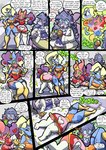
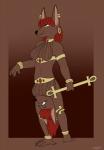
Two humanoid upper bodies fused at a shared midsection in the same rotational arrangement: one figure is upside_down relative to the other, so that each functions as the other's lower half. Neither figure has legs or a pelvis of its own; the fusion point is functionally the "hip" of the combined organism. The two halves are often mirror copies of one another.
The inverted figure typically bears the weight of the pair, supporting itself (and the upright figure-whose own hands remain free) on its own hands or hand_feet. Whether they’re lying on the ground, propped up, or braced on all fours, the limbs must be ‘arms’. If they’re legs, then it’s a pushmi-pullyu. Unless the figure is ‘standing’.
Distinct from pushmi-pullyu, which describes a single four-legged body with a head at each end (no figure is inverted, both ends stand independently, and there is no shared "hip" fusion point). Queen conjoinment instead describes two complete upper bodies, one flipped, doing the work of a single lower body between them.