←Back to Wiki

japanese_text

📅 Updated:2026-09-24
🕒 Created:2011-07-01
🆔 ID:1821

Description

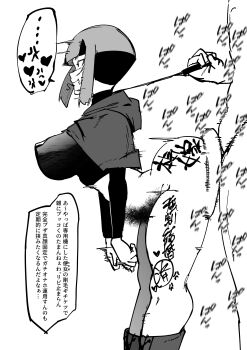
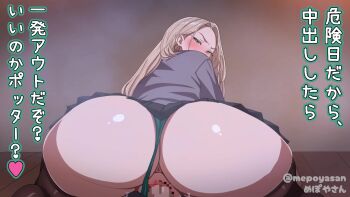
These images or animations show text written in Japanese.
Japanese text often consists of a mix of logographic characters called "kanji" and syllabic characters called "kana."
Logograms are characters that usually represent an idea. They range in complexity from 一 to 鬱.
Kana represent a single mora (almost the same as a syllable): Ka, N, Mu for example.
Kana can be used to write full sentences without the use of Kanji, but most Japanese text will be a mix of Kanji and Kana. However, if you see a sentence made entirely of Kanji, it is likely that you are actually looking at Chinese text instead.
To add additional complication, there are two sets of kana which are used for different purposes. Hiragana is the most commonly used, while Katakana is used for most foreign words, sound effects, emphasis, and so forth.
If you can read the kana, you can read most of the onomatopoeia found on Japanese pictures. Though they may still be confusing, as Japan uses a lot of onomatopoeia and their meanings are not all obvious.
Japanese can also be written with the Latin script, which is called Romaji (not romanji!). There are various methods of doing this, but Hepburn romanization is the most common.

Guide to reading Hiragana and Katakana
Simply put, each sound is made of a consonant and a vowel, unless the sound is JUST a vowel sound or the exception "n".
So, for reading the tables below, take the consonant on the left and combine it with the vowel on the top.
Hiragana
Hiragana
[ltable]
|a|i|u|e|o
|あ|い|う|え|お
k|か|き|く|け|こ
s|さ|し|す|せ|そ
t|た|ち|つ|て|と
n|な|に|ぬ|ね|の
h|は|ひ|ふ|へ|ほ
m|ま|み|む|め|も
y|や||ゆ||よ
r|ら|り|る|れ|ろ
w|わ||||を
[/ltable] [/section]
Katakana
Katakana
[ltable]
|a|i|u|e|o
|ア|イ|ウ|エ|オ
k|カ|キ|ク|ケ|コ
s|サ|シ|ス|セ|ソ
t|タ|チ|ツ|テ|ト
n|ナ|ニ|ヌ|ネ|ノ
h|ハ|ヒ|フ|ヘ|ホ
m|マ|ミ|ム|メ|モ
y|ヤ||ユ||ヨ
r|ラ|リ|ル|レ|ロ
w|ワ||||ヲ
[/ltable][/section]

Exceptions:

There are a few exceptions, mostly due to pronunciation changes in Japanese over time:
  • si is "shi"
  • ti is "chi"
  • tu is "tsu"
  • ん/ン is "n" or rarely "ng"
Diacritic marks and other quirks

Dakuten and Handakuten

Additionally, many of the characters can be modified with a single symbol that changes the initial consonant.
The first is called Dakuten, and can be seen here: ゛It is a pair of small lines in the upper right corner of the character.
Dakuten (sometimes called ten-ten) indicates that the consonant is voiced:
  • "K" becomes "G".
  • "S" becomes "Z" (however, "shi" becomes "ji").
  • "T" becomes "D" (however, "chi" also becomes "ji," and "tsu" becomes "dzu").
  • "H" becomes "B".
The second is called Handakuten, and can be seen here: ゜It is a small circle in the upper right corner.
  • "H" becomes "P".
There are certain extensions worth mentioning that are, although rare, can still see use for emphasis or irony in literature.
  • "u" mora (ウ) with Dakuten becomes the "v" consonant when used with Yōon (next section).
  • "W" with Dakuten becomes "V". This is used less often than the one above.
  • "K" with Handakuten becomes "NG" (most common in Hiragana for specific dialects).
  • "R" with Handakuten becomes "L".
Normally, the sounds of the letter "r" and "l" are merged in spoken Japanese. However, the R-row can receive a Handakuten to emphasize specifically the "l" sound.

Yōon

Sometimes you may see a small letter in the lower right of a larger one. These are usually the letters for Ya, Yu and Yo. These modify the sound of the letter that came before. This letter will always end with an -i sound: ki, shi, ni, mi, etc.
For example:
  • Ki followed by a small ya きゃ makes the sound "kya."
  • Ni followed by a small yo にょ makes the sound "nyo."
  • Vu followed by a small e ヴェ makes the sound "ve."

Sokoun

A small "tsu" symbol means "double the consonant that comes next"
For example:
  • ポッキー Po(small tsu)kii is Pokkii
  • はっきり Ha(small tsu)kiri is hakkiri

Chōonpu

A long straight line means to repeat the preceding vowel sound.
ハー is "haa"[/section]

Conclusion

Obviously, this is a very expansive topic for this wiki and if you are interested in learning more, there is a wide variety of resources available.
Examples of words written in different ways
[ltable]
Kanji|Kana|Romaji|translation
|ポケットモンスター | poketto monstaa | pokemon
|ゼクロム | zekuromu | zekrom
明日|あした | ashita | tomorrow
獣|ケモノ | kemono | animal
|ドラゴン | doragon | dragon
竜|りゅう | ryuu | dragon, especially eastern.
犬|いぬ | inu | dog
猫|ねこ | neko | cat[/ltable][/section]

See Also: